 Image 1 of 12
 Image 2 of 12
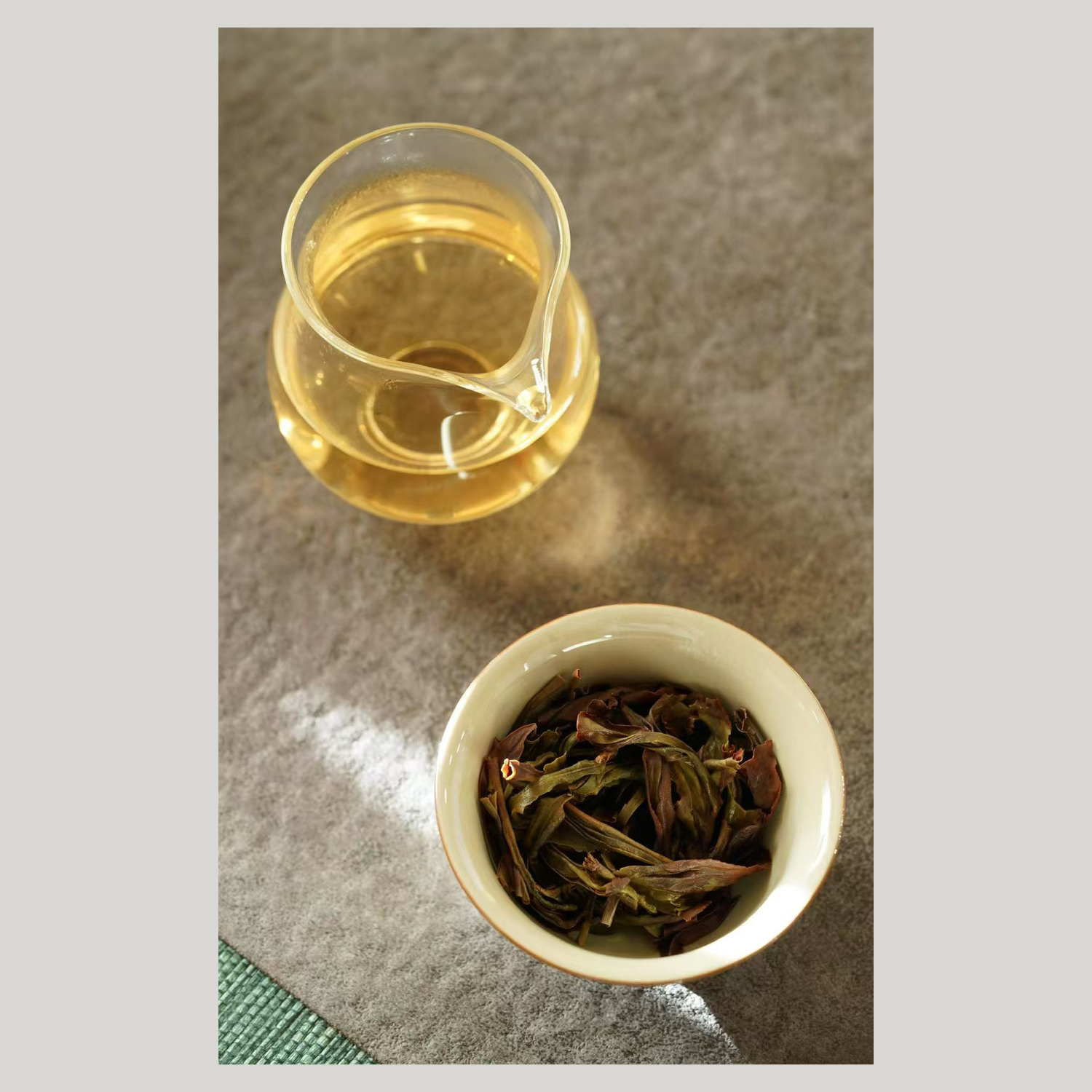 Image 3 of 12
 Image 4 of 12
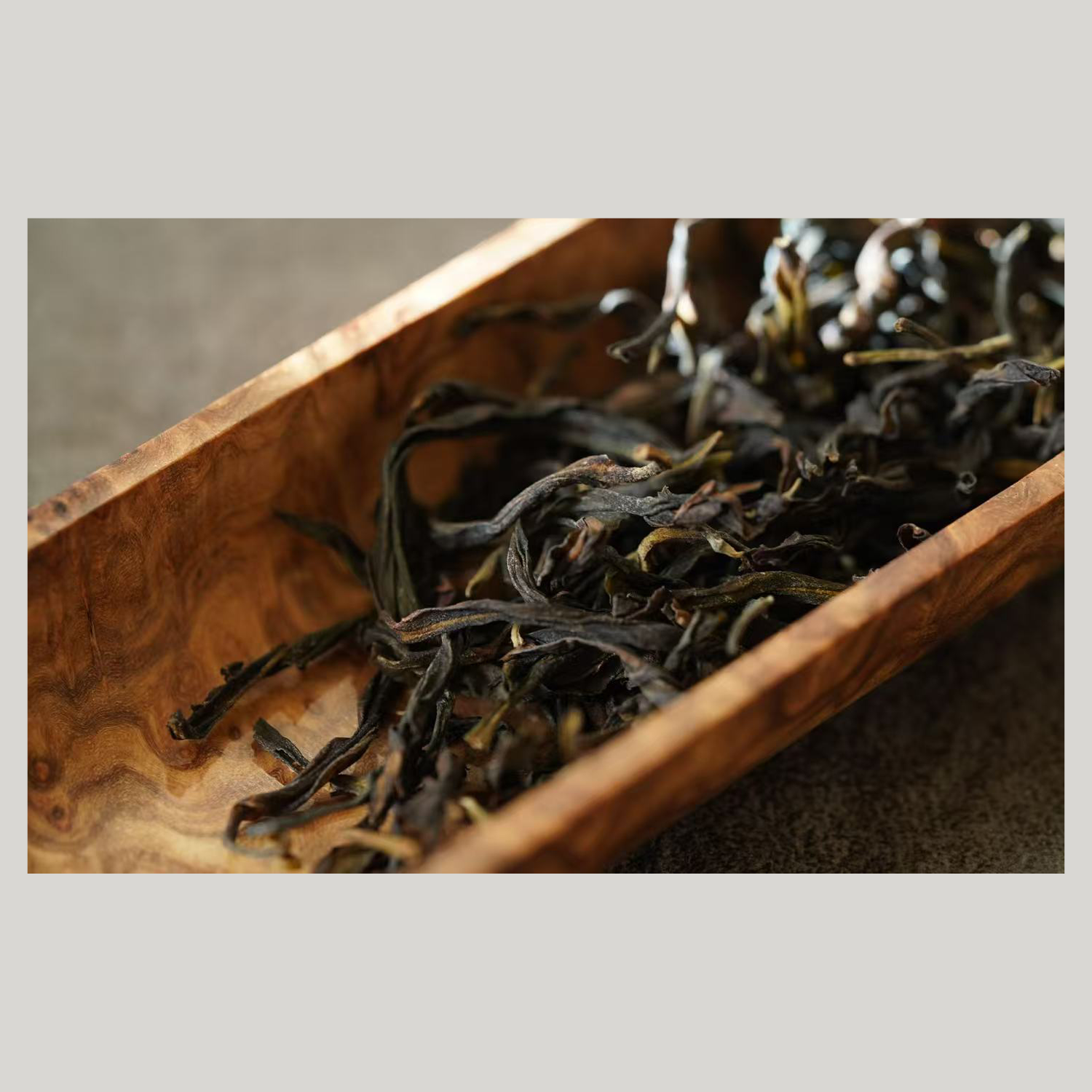 Image 5 of 12
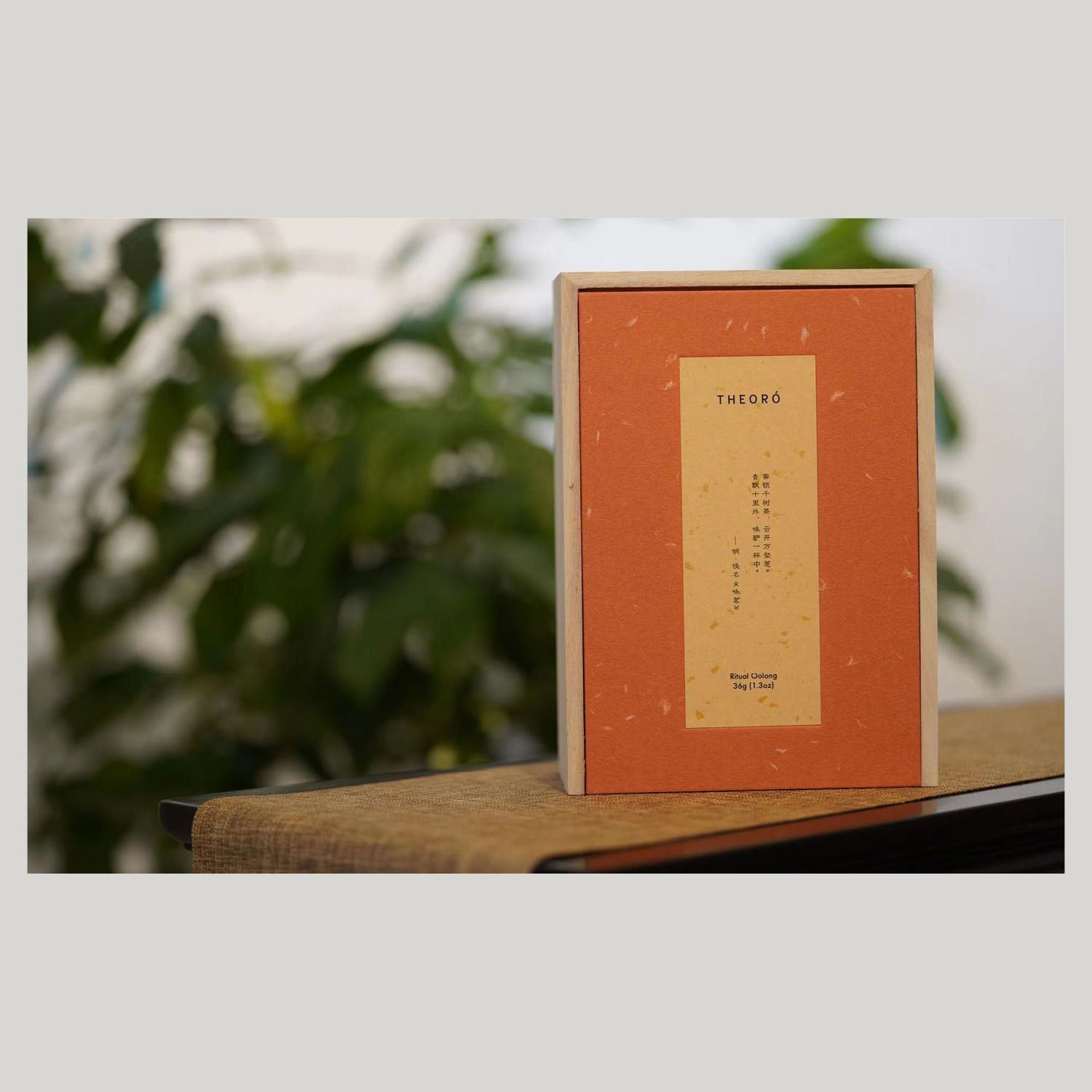 Image 6 of 12
 Image 7 of 12
 Image 8 of 12
 Image 9 of 12
 Image 10 of 12
 Image 11 of 12
 Image 12 of 12
Profile
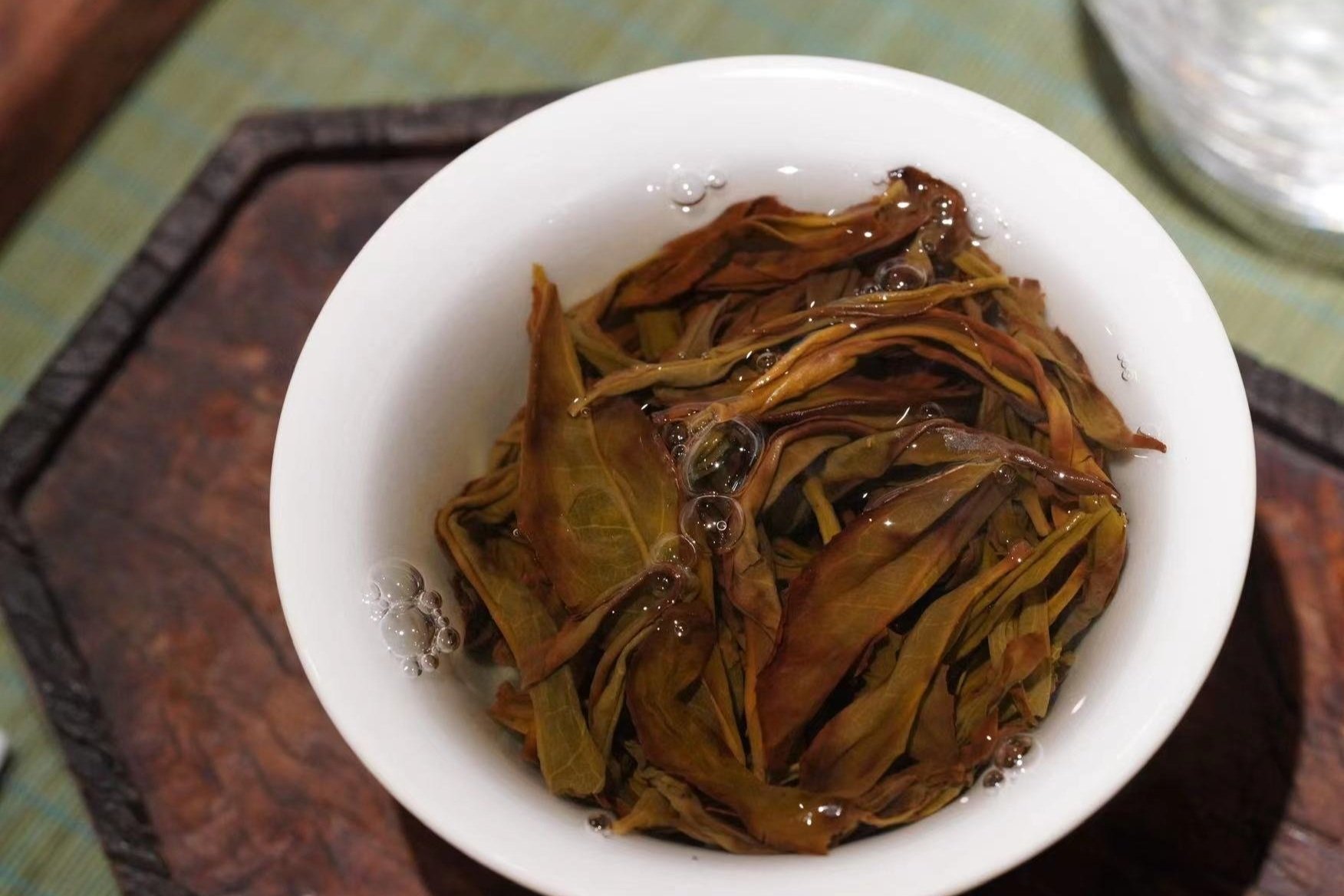
Aroma: Honeysuckle, a flower garden after the first spring rain
Flavor: S’mores, fig, asian pear
Vitality: Brisk mouthfeel, layered, blossom-like sweet lingering
Mood: Uplifting, cherished, dreamy
enjoyment
-
Water: Spring water or purified water.
Temperature: Approximately 212°F (100°C).
Tea-to-Water Ratio: 1 packet of tea per 1/2 cup of water for each infusion.
Tea Ware: Lidded bowl, small teapot.
Note: The recommended tea-to-water ratio and tea ware above are for the Gongfu brewing method. However, you can also use a more Western-style vessel, such as a large teapot, French press, or a water bottle with a removable filter. Simply match the water amount to the size of your chosen vessel.
-
1 ~ 6: Steep quickly, for about 5 seconds each.
> 6: Adjust steeping time according to personal preference.
Note: When using a Western-style vessel, adjust the steeping time based on the amount of water. For example, if you’re using a french press that holds 2 cups of water (4 times the volume of 1/2 cup), extend the brewing time for infusions 1–2 to 20 seconds for the Ritual Oolong.
-
Servings: For optimal enjoyment, use each packet for 12 infusions throughout the day.
Duration: Best enjoyed within 2 day.
When: Avoid on an empty stomach, and if you're sensitive to caffeine, skip it after dinner.
Frequency: Limit to 1 packet per day.
Note: When using a Western-style vessel, adjust the number of infusions based on the amount of water. For example, if you’re using a French press that holds 2 cups of water (4 times the volume of 1/2 cup), aim for 3 infusions per packet for the best experience.
-
Rich food such as cheese, pizza, pasta, chicken noodle soup perfectly complements this tea. It also pairs elegantly with sweet fresh fruit such as mango, peach, pineapple as well as creamy dessert like cheesecake, mille crepe cake or western style dessert.
Legacy
Phoenix in Solitary Blossom is one of the four major categories of oolong tea. In contrast to Cliff Tea, which exudes a commanding presence, or Iron Goddess of Mercy, renowned for its elegance and freshness, Phoenix in Solitary Blossom stands out for its intense fragrance, rich flavor, and exceptional endurance during steeping. Chaozhou, where it originates, has a long history of tea production and is recognized as the birthplace of Chinese Gongfu tea. The history of Chaozhou oolong tea dates back to the late Ming and early Qing dynasties.
During the Hongzhi period (1488 to 1505 AD) of the Ming Dynasty, teas from Daizhao Mountain (now known as Phoenix Mountain) became an official tribute tea, referred to as "Daizhao Tea." Records from the Chaozhou Prefecture Gazetteer mention that "during the Jiajing period, the court received over 150 jin of leaf tea and over 108 jin of bud tea." In Guo Zizhang’s *Chaozhong Miscellaneous Notes* (circa 1582), it was noted that while tea wasn't highly valued in Chaozhou customs at the time, Phoenix Mountain tea, also called Daizhao Mountain tea, was praised for its ability to "clear the lungs and relieve summer heat."
In the 44th year of the Kangxi period (1661–1722 AD) of the Qing Dynasty, local official Guo Yufan documented in his travel writings that the tea trees in Phoenix Mountain had large, ancient trunks but fewer leaves. Locals noted various leaf shapes, including Dragon Ball, Crab Eye, Sparrow Tongue, and Lilac. These records indicate that at the time, the tea trees of Phoenix Mountain exhibited great diversity, and farmers had not yet focused on selective breeding.
The development of Phoenix tea began with the differentiation of Fenghuang Shuixian and Fenghuang Dancong from wild varieties. Over time, farmers expanded tea cultivation from small plots around their homes to larger plantations on the mountains, gradually growing the tea industry. In 1898, Wen Hun from Liziping Village in Wuchong traversed the mountains to retrieve a specific Fenghuang Dancong cultivar from Zailiao Village. His success in propagating that cultivar marked a revolutionary step, initiating the asexual reproduction of various Fenghuang Dancong cultivars. By 1979, tea cultivation had spread to 50 villages within the high and mid-mountain regions of Phoenix Mountain, replacing rice fields with tea plantations.
The craftsmanship of Wuyi Cliff Tea influenced the development of Phoenix in Solitary Blossom. Early on, this tea did not have its own name and was often referred to as "Guangdong Wuyi." By 1946, the Chaozhou Gazetteer documented that Phoenix in Solitary Blossom employed both stir-frying and roasting methods, indicating that the tea-making techniques had matured.
Today, Phoenix in Solitary Blossom boasts over 80 different fragrance profiles, each with unique and often unusual names, reflecting the specific cultivars of the tea trees and embodying the flavor, fragrance, or cultural significance associated with the tea. This makes Phoenix in Solitary Blossom a tea rich in both botanical and cultural heritage.
Authenticity
-
The ‘Phoenix in Solitary Blossom’ oolong tea is cultivated in the Phoenix Mountain range near Chaozhou City, Guangdong Province. The whole range composed with hundreds of mountain peaks. The core cultivation regions are nested within or near below perimeter:
Wu Dong Mountain and Feng Niao Ji Mountain in the northwest; Da Zhi Mountain in the east; Wan Feng Mountain in the west; Shuang Ji Liang Mountain in the south.
THEORÓ Ritual Oolong is from Shishanpu Village, situated at approximately 1640 feet (500 meters) altitude, in between Wu Dong Mountain and Da Zhi Mountain within the Phoenix Mountain range.
-
Phoenix in Solitary Blossom is made from either Phoenix Mountain Camellia Sinensis var. Fenghuang Shuixian (hereafter referred to as Shuixian) or Phoenix Mountain Camellia Sinensis var. Fenghuang Dancong (hereafter referred to as Dancong). However, in both cases, it must be grown within the Phoenix Mountain range, hence the prefix “Phoenix Mountain.”
Shuixian is a wild indigenous variety native to Phoenix Mountain, where even trees of the same variety exhibit significant differences in leaf morphology, aroma, and flavor profile. As a result, distinct aromatic strains were selected from the Shuixian variety for cultivation, leading to the birth of Dancong—Dancong refers to the superior single plants of Shuixian. In short, all Dancong is Shuixian, but not all Shuixian is Dancong.
Due to the unique characteristics of each tea tree’s shape and flavor, each plant is recognized as its own cultivar and typically called Dancong: followed by its fragrance profile. This distinction led to the convention of single-plant picking, processing, packaging, and selling.
Since 1990, the widespread use of cutting and grafting techniques has meant that the fresh leaves of many newly planted “Dancong” trees no longer come from a single original plant but from a larger collective of related plants that carry the same genes as their original Dancong tree. Wild-growing Shuixian, known for their unpredictable flavor profiles and fragrance, have become almost extinct in the fine tea market.
Although many tea makers and sellers still refer to these newly planted varieties as “Dancong,” this can be misleading, as “Dancong” means Single (dan) Bush (cong), emphasizing its uniqueness, which the propagated trees do not qualify for. To be accurate, only the original Dancong trees should be called Dancong, while the propagated varieties are properly classified as Shuixian, derived from a specific Dancong cultivar.
THEORÓ Ritual Oolong uses leaves from Phoenix Mountain Camellia Sinensis var. Fenghuang Shuixian, propagated from the original cultivar of Fenghuang Dancong: Yin Hua Xiang.
-
The age of the tree is crucial—it improves with age, enhancing its endurance during steeping.
In the general market, most ‘Phoenix in Solitary Blossom’ teas are harvested from trees rarely exceeding 30 years old.
Premium ‘Phoenix in Solitary Blossom’ typically comes from trees aged between 30 to 50.
High-end ‘Phoenix in Solitary Blossom’ typically comes from trees aged between 60 to 80 years, known for their exceptional quality.
Trees over a century old are exceedingly rare. The oldest available is approximately 300 years old, cultivated by only one tea farmer, yielding less than 5000 grams annually and fetching prices as high as hundreds per gram.
THEORÓ Ritual Oolong is picked from trees that are over 30 years old.
-
This variety is early-budding, with harvesting typically occurring from late March and sometimes extending into May.
Leaves are generally picked after the new shoots have emerged and the buds have settled, usually harvesting 2 to 5 leaves. Older, coarser leaves with aged cells and higher cellulose content tend to produce dried tea with inferior appearance and flavor. That being said, the optimal harvesting time is from the Spring Equinox to Grain Rain.
THEORÓ Ritual Oolong is harvested between the Spring Equinox and Grain Rain, from March 19th to April 18th.
-
Phoenix oolong tea’s pricing isn’t solely determined by its vintage. Fresh teas, particularly the high-grade ones, are usually savored within the first two years due to their exquisite fresh aroma and sweetness. As these teas age, they undergo a transformation, acquiring woody, ginseng, and earthy aromas while losing some of their original floral and fruity notes.
Therefore, both fresh and older Phoenix in Solitary Blossom teas has their own unique characteristics, either necessarily more enjoyable to drink thank the other.
THEORÓ Ritual Oolong is from the year 2024.
Craftsmanship
-
The freshly picked leaves are transported back and need to be spread thinly in time for sun-withering. Sunlight creates fragrance, which is the first key step in developing the excellent quality of Phoenix in Solitary Blossom.
-
After sun-withering, the tea leaves that have lost their sheen are moved indoors for further air-drying. Through this process, moisture from the stems spreads into the cells within the leaves, helping them regain a firm and fresh state, commonly referred to as rehydration. This creates the necessary material conditions for the next step.
-
The sculpting of Phoenix in Solitary Blossom involves three alternating steps: tossing, shaking, and resting, which are repeated several times. This process is crucial for the formation of the tea’s aroma and flavor.
The work is often done at night when lower temperatures and higher humidity facilitate the leaves’ rehydration and handling. Hence, the saying “overnight tea is good tea.” After several rounds of tossing, when the leaf edges turn red, the leaves take on a spoon-like shape, and a fresh floral fragrance emerges, it is time to immediately proceed to the next stage.
-
By using high temperatures to inhibit the enzymatic oxidation of fresh tea leaves, the formation of the tea's color, aroma, flavor, and other internal components is controlled.
-
After the tea leaves soften through fixation, they are rolled to break the cells. The internal substances of the tea seep out and adhere to the surface of the leaves. Through biochemical reactions, this gives the tea a glossy appearance, a rich and mellow flavor, and makes it more resistant to multiple infusions.
-
After the tea leaves are rolled, they must be roast-dried promptly. If left out for too long, polyphenols will continue to oxidize rapidly, which can cause the tea infusion to become cloudy, with a bland taste and insufficient aroma, and may even develop a sour or spoiled flavor. fire enhances color, and controlling the roast-drying process is one of the key factors in determining the quality of the tea.